
In Germany in August...
8 news + 1 cuoriosity that you should know
Hi Leute, welcome to a new episode of Germany Explained.
This week’s topics are:
📅 What’s happening in August
🛡️ What is the Berufsunfähigkeitsversicherung?
At the end you’ll find our tips 😎
📅 What’s happening in August
August begins tomorrow and, as always, we’re giving you a round-up of the most important changes that will come into effect.
1 – Penalties for late tax returns come into force
Today is the deadline for submitting your tax return for the 2025 tax year. Anyone who was required to file a return and does so after 31 July will face penalties for late submission. If you need an app or software to complete it, you can find them here. Alternatively, you can use an tax advisor, in which case you’ll have until March next year.
2- IKK is increasing its contribution
The IKK health insurance fund is raising its additional contribution, the so-called ‘Zusatzbeitrag’, to 3.85 per cent. This means that those insured with this health insurance fund will pay a total contribution of 9.23% of their gross salary. If you wish to switch health insurance providers, you’ll find various options here.
3- Right to after-school care
From 1 August, the legal right to Ganztagsbetreuung comes into force. This refers to full-time childcare, i.e. after-school care. Children in Year 1 will be looked after for up to 8 hours a day.
4- Updates on artificial intelligence
From August anyone creating content using artificial intelligence must clearly state this. This new European regulation aims to protect users from online scams and fake content. Those who fail to comply with the rule risk fines running into millions.
5- Deutsche Bahn loyalty points
Deutsche Bahn’s loyalty points (BahnBonus) will have a ‘dynamic’ cost. Reward tickets for the most popular trains will cost more points, whilst those booked in advance will cost fewer.
6- New vocational roles
The new academic year, the ‘Ausbildungsjahr’, introduces 22 modern vocational roles. The aim is to meet the demands of digitalisation by phasing out outdated classifications and updating training programmes in the construction sector.
7- BAföG adjustment postponed
The increase in the accommodation allowance (from €380 to €440) will not come into effect in August. Students will have to wait until the summer semester of 2027.
8- Right to repair formalised
Benefits for those who opt to have an electronic device repaired rather than replaced. The current statutory warranty period is being extended by a further 12 months.
9- Solar eclipse
Let’s finish with a bit of trivia. On 12 August from 7.00 pm, there will be a partial solar eclipse visible in Germany too. The percentage of the sun’s surface covered will range from 90 per cent in Freiburg to 85 per cent in Berlin.
🏠 Looking for an apartment in Germany?
Avoid unverified private listings. There’s always a risk that they’re scams.
For your search, we recommend using secure, trusted digital platforms like our partner Housing Anywhere.
Verified rooms and apartments in over 80 German cities. No risk of unpleasant surprises.
Remember to sign up to get 20% off the commission.
🛡️ How the Berufsunfähigkeitsversicherung works
A slipped disc, depression, cancer or Long Covid. In Germany, the conditions that bring a working career to an end each year are more common than one might think.
According to statistics, over the course of their working lives, 1 in 4 workers finds themselves unable to work at least once. Suddenly finding yourself without an income means risking financial ruin.
Your livelihood is at stake: paying the rent or your mortgage, supporting your children, making contributions towards your pension and everything else.
Many people think that if something were to happen to them, they would draw on their savings. However, the figures show that this is almost impossible.
If, at the age of 50, you earn €2,500 net and, due to an accident or illness, you can no longer work, you would need at least €500,000 to maintain your standard of living until retirement age.
In Germany, the way to protect yourself against these potential risks is through a policy called Berufsunfähigkeitsversicherung (BU). This is occupational disability insurance.
One important thing to know is the difference between being off work due to illness and occupational disability:
Being off work due to illness (Arbeitsunfähigkeit): if you’re off work due to illness, your employer pays your full salary for the first six weeks. After that, your state health insurance fund takes over and pays you Krankengeld for a maximum of 72 weeks.
Occupational disability (Berufsunfähigkeit): this applies when an illness or injury becomes permanent. You are considered Berufsunfähig if you are unable to work to more than 50 per cent of your capacity for a period exceeding six months. In this case, the BU policy takes effect.
What is it and how does it work?
Occupational disability insurance is a private policy that replaces the income you used to earn but can no longer receive. The basic mechanism is very simple: you pay a monthly premium to the insurance company and, in return, if you lose the ability to carry out your job, the insurance pays you a guaranteed monthly benefit until you reach retirement age.
Let’s’ll repeat this again because it’s the most important point. For the policy to be triggered and start paying out, two conditions must be met:
You must be at least 50% unable to carry out your profession.
This incapacity must last (or be predicted by doctors) for at least 6 months.
Who should consider it?
Anyone who relies on their salary.
But let’s look at each case individually:
Employees: anyone who relies on a single salary.
Self-employed professionals: this is even more important for this group because they very often do not pay contributions into the state pension scheme and have no public protection.
Students, apprentices and recent graduates: taking out this policy whilst you are young and in good health allows you to lock in more favourable rates.
Manual or artistic trades: anyone working in craft, social, sporting or musical professions should take out cover as soon as possible, as obtaining a policy in these sectors becomes more difficult and expensive in the future.
How much does this policy cost?
There is no fixed cost. The monthly premium you pay is calculated based on several factors:
Age
State of health
Occupation
Whether you have risky hobbies
The parameters chosen by the individual
What to look out for before signing
These are the most important clauses you must pay close attention to when reading the quote:
No ‘forced change’ (Verzicht auf abstrakte Verweisung): the insurer must not have the right to deny you the benefit by forcing you to take up another job considered to be of an equivalent level.
Adequate pension: the sum insured should cover at least 80 per cent of your last net salary.
Inflation adjustment: the pension must increase annually in line with the rate of inflation.
Supplementary cover guarantee (Nachversicherungsgarantie): you must be entitled to increase the sum insured without having to undergo further medical examinations when significant events occur.
Deferral of premiums (Stundung): if you lose your job and become unemployed or go on parental leave, the policy must allow you to defer payments for up to 12 months without having to provide any specific justification.
No obligation to notify (Verzicht auf Mitteilung): if, after signing the contract, you decide to take up an extreme sport or fall ill, you must not be obliged to notify the insurer.
Optimal term: the policy must cover you right up to the actual year in which you retire.
Waiting periods and retroactive payments: the policy must pay out immediately, without any initial waiting period. Furthermore, if you report a health issue late, the cover must allow you to claim retroactively for at least the last three years.
Flat-rate rule (Pauschalregelung): to avoid disputes with the insurer, ensure that the policy pays 100% of the annuity as soon as a 50% incapacity is confirmed.
Medical prognosis of just 6 months: the contract must require a medical prognosis of future incapacity of just 6 months.
Why consider Hannoversche for your policy?
Their policy has been awarded the title of best on the market (rating ‘Sehr Gut’ – 0.8) by Stiftung Warentest. And here’s why:
No forced switch
Guaranteed integration
Anonymous medical check
👉 Click here to get your free quote!
💡 Do you work as a freelancer in Germany?
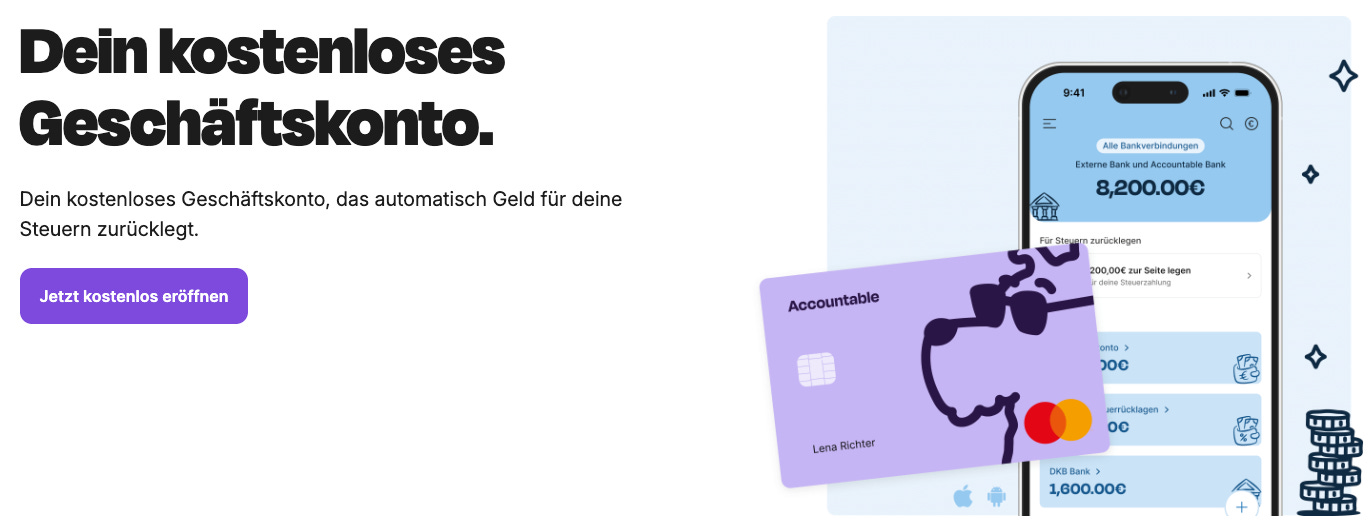
You know too well how tiring it is to keep on top of all the bureaucracy...
Accountable is the business account you need:
✅ Issue invoices without making mistakes
🏛️ Pay your taxes directly from the app
💡 Stay up to date with your tax deadlines
🛡️ Accountable covers the cost if they make a mistake
🇬🇧 The app is also available in English
💡 Offers of the week
We decided to add a section dedicated to the best weekly offers, so we can keep you constantly updated. Please note that these are affiliate links. This means that if you purchase through these links, we receive a small commission.
💶 Bank accounts:
ING: Free account + €200 bonus
Norisbank: Free account + €120 bonus
C24: Free account + €75 bonus
Commerzbank: Free account + €150 bonus
Targobank: 3.25% interest for the first 4 months
💳 Credit cards:
TF Mastercard: 75€ bonus
Easybank: 75€ bonus
BWM American Express: bonus di 100 €
📊 Investment brokers:
Smartbroker: the cheapest
Traders Place: €60 bonus
DKB: €100 bonus
Trade Republic: 2.25% interests on you savings
Postbank: 3,25% interests on you savings
Our tips 😎
In this section, we recommend our own services or products, or those from other companies. The links we share are affiliate links. This means that if you purchase through these links, we receive a commission.
This helps us enormously to fund ourselves, keep this project going, and continue producing useful, high-quality content!
🛡️ Looking for life insurance in Germany?
🇩🇪 Want to start learning German properly?
⭐️ The 4 most important types of insurance in Germany?
🚗 Want the best cover when you’re driving?
🏠 Are you looking for a mortgage?
🚀 Let your savings work for you whilst you sleep
💶 Do you need a business loan in Germany?
🏥 Are you self-employed or do you earn more than €77,400 gross a year?
🛡️Do you know which insurance is the most important in Germany?
📉 Have you filed your tax return yet?
👋🏻 Have you decided to leave Germany?
💳 Do you need a credit card?
🧾 Is your Nebenkosten always too high?
🛜 Are you paying too much for your internet connection?
💻 Do you need specific advice?
See you next week!
Cheers,
Gëzim & Fisnik